They Wanted Their Vacation Home Built on a Utah Mountain. How Hard Could It Be?
They had been coming to Southern Utah for years. Every summer they escaped the heat, and every winter they returned when the snow settled quietly across Duck Creek and Cedar Mountain. They loved the stillness, the pine air, and the way the stars looked different at elevation. Over time, what began as a vacation slowly turned into something more permanent in their minds.
One evening, standing on a quiet lot surrounded by trees, they said it out loud.
“Let’s build here.”
And then came the question almost everyone asks when they first consider building a mountain home in Utah.
“How hard could it be?”
For many families, building a mountain home in Utah represents more than construction. It is a vision of holidays gathered around a fireplace, grandchildren playing in fresh snow, and summers spent on a shaded deck above the heat of the valley. It is the idea of creating something that will stay in the family for generations. But building on a Utah mountain is not the same as building in town. It can absolutely be done well. It simply has to be done with intention, preparation, and experience.
The Land Is Beautiful. The Land Is Not Easy.
The first surprise usually comes with the land itself. Mountain lots are stunning, with tall pines, quiet roads, and sloped terrain that offers views stretching for miles. What many people do not realize is that not every lot is ready to build the moment you purchase it.
Our clients had already purchased their property before calling us. Because cabins surrounded the area, they assumed construction would be straightforward. What they quickly learned is that building a mountain home in Utah begins long before the foundation is poured.
Year-round access must be verified, especially in areas where winter road maintenance can vary. If you are still in the early planning stages, we break this down in more detail in our Guide to Building a Mountain Home in Southern Utah, including what to look for before you ever purchase a lot. Utilities are not always close by, even if neighboring cabins appear established. Water, power, and septic solutions need to be confirmed early. Sloped lots require soil testing and careful evaluation of stability. County zoning, setbacks, and fire requirements must all be reviewed before plans are finalized.
The mistake we see most often is assuming that proximity to other homes guarantees ease. Skipping geotechnical evaluations or underestimating excavation and site preparation costs can create expensive setbacks later. Mountain land requires respect. Slopes affect foundations, drainage must be engineered properly, and erosion control cannot be overlooked. When these early steps are handled carefully, they protect everything that follows.
The Mountain Climate Is Not the Valley
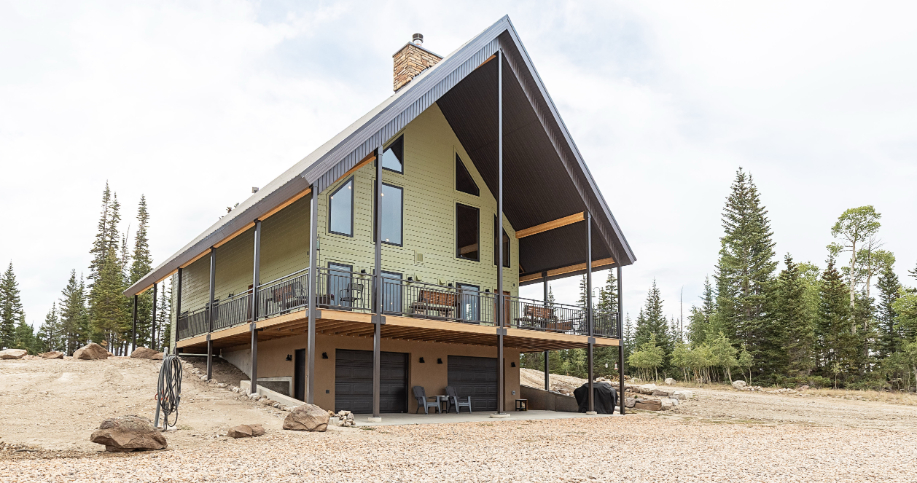
Elevation changes everything. Snow loads in Duck Creek and on Cedar Mountain require specific structural engineering. Roof pitch, truss design, and framing systems must account for real winter weight, not just aesthetics.
Our clients originally envisioned a simple roofline with expansive glass walls to capture the view. The design was beautiful, and the vision made sense emotionally. Structurally, however, it needed to be engineered for the mountain climate. In higher elevations, climate is not a finishing detail. It is a foundational decision.
When building a mountain home in Utah, roofing systems must be designed for heavy snow loads. If you want a step-by-step look at how mountain cabin construction unfolds from start to finish, our Building Your Dream Mountain Cabin in Southern Utah guide walks through the full process. Drainage around the foundation must be intentional and carefully planned. High-performance insulation and windows are essential for managing extreme temperature swings between seasons. In forested areas, defensible space and fire-resistant materials are not optional. They are responsible decisions.
Many problems do not show themselves immediately. You may not see structural integrity from the road, but you feel it every winter. Building correctly for elevation protects both comfort and long-term durability.
The Part No One Talks About: Logistics
The next layer of reality often surprises people even more than the land and climate. Mountain construction moves differently. Materials must travel narrow roads. Weather can delay framing or concrete work. Subcontractors who regularly work at elevation are fewer, and county inspections require thoughtful coordination.
For our clients, there was another layer of complexity. They lived out of state. They could not stop by after work to check progress or drive up on a weekend to see framing take shape. Every update mattered because they were placing their trust in a process happening miles away.
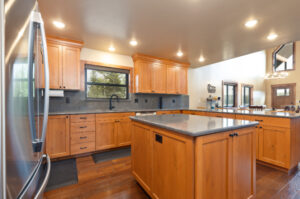
Building a mountain home in Utah from another state requires more than construction knowledge. It also requires choosing the right team. If you are comparing builders, our article on Finding the Best Home and Cabin Builders in Southern Utah can help you know what to look for. It requires consistent, proactive communication.
How We Keep Out-of-Town Clients Informed
When you are building from Arizona, California, or anywhere outside Southern Utah, uncertainty becomes the hardest part of the process. Questions surface naturally. Is it on schedule? Is the framing correct? Did the weather cause delays? Are we still aligned with the budget?
Our role is to remove that uncertainty. We believe that trust is built through steady communication and follow-through. That means scheduled progress calls, regular photo and video updates from the job site, and transparent budget tracking. We provide clear milestone timelines so clients understand what phase we are in and what comes next. If anything shifts, whether due to weather or supply timing, we communicate it immediately.
Most importantly, our clients have a consistent point of contact and a personal on-site oversight. They are not chasing updates or wondering who to call. They know exactly where their project stands.
Halfway through their build, our clients shared something that stayed with us. They said, “We stopped worrying once we felt informed.” That is the difference clear communication makes. It turns distance into confidence.
What It Really Takes to Build a Mountain Home in Utah
Building a mountain home in Utah takes more than vision. It requires careful site planning, structural engineering suited for elevation, realistic timelines, and honest budgeting. It requires respect for the land and patience with the process.
Mountain weather does not rush. County processes move at their own pace. The goal is not speed. The goal is durability and long-term performance. Doing it right the first time protects your investment for decades and ensures the home performs the way it should in every season.
When expectations are aligned with reality, and the process is handled with care, the experience becomes steady rather than stressful.
The Outcome
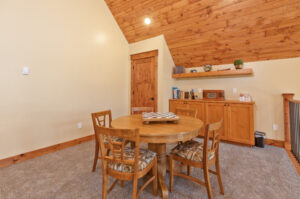
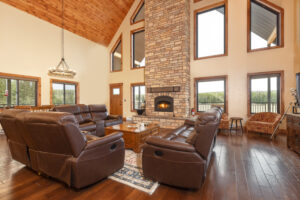
Their first winter arrived with a heavy storm. Snow settled across the roof exactly as engineered, and the insulation held steady warmth inside. There were no surprises and no structural concerns, just the quiet satisfaction of knowing it had been built correctly.
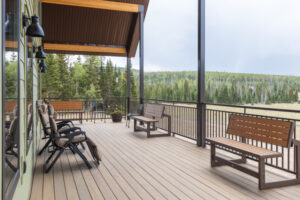
In summer, the windows opened to cool mountain air. Grandchildren ran across the deck while the house felt settled into the land rather than forced onto it. The vision they had years earlier had become something solid and lasting.
That is what building a mountain home in Utah should feel like. It should not feel uncertain or chaotic. It should feel prepared, intentional, and grounded in trust.
It Is Not Easy. But It Is Worth Doing Right.
If you are considering building a mountain home in Utah, understand this clearly. It is not simple. The land, the climate, and the logistics all require careful attention.
But with the right planning, the right engineering, and the right builder, it becomes something lasting. It becomes a retreat, a gathering place, and a legacy property your family can rely on for generations.
Trust is our foundation. Quality is our legacy.
If you would like to see examples of past mountain builds, we invite you to explore our recent projects on our main website. When you are ready to talk through your vision, you can reach us directly through our Contact Page.
If you are ready to begin planning your mountain home in Duck Creek, Cedar Mountain, or anywhere in Southern Utah, we invite you to start the conversation. Let’s build it right the first time.